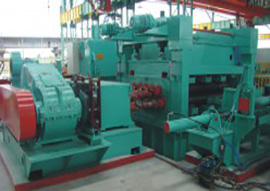
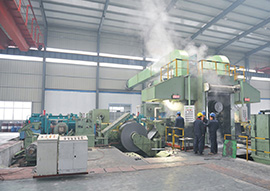
**Leading the Metal Rolling Industry: Wuxi DLS Machinery Co., Ltd. Unveils Revolutionary Tandem Rolling Mill Technology**Wuxi DLS Machinery Co., Ltd., a premier manufacturer headquartered in the Hongshan machine photoelectric industrial park of Wuxi Xinwu District, China, proudly introduces its cutting-edge **Tandem Rolling Mill** – a state-of-the-art solution designed to meet the evolving demands of the metal rolling industry. With over three decades of dedicated expertise since its inception in 1985, Wuxi DLS Machinery continues to cement its position as a leader in precision machinery through innovative design, robust manufacturing capabilities, and an unwavering commitment to quality.### A Legacy of Excellence in Rolling Mill ManufacturingCovering a sprawling 20,000 square meters, Wuxi DLS Machinery houses more than 50 advanced precision machining units, including large floor-type boring machines that enable the production of heavy-duty equipment. The company boasts an impressive annual production capacity exceeding 200 sets, with the capability to handle heavy lifting of up to 300 tons per single piece of equipment. This exceptional scale of operations, combined with rigorous inspection standards, positions the company at the forefront of Chinese rolling mill manufacturers.Since its establishment, Wuxi DLS Machinery has devoted itself to comprehensive technological research and practical production refinement of various rolling mills. These include two-roll, four-roll, six-roll, twelve-roll reversing mills, and twenty-roll reversible and continuous rolling mills. This depth of experience has culminated in the design and manufacture of the revolutionary Tandem Rolling Mill—a game-changing product engineered to optimize metal processing for industries worldwide.### Introducing the Revolutionary Tandem Rolling MillThe newly unveiled **Tandem Rolling Mill** represents a leap forward in rolling mill technology, aiming to transform the metal production process entirely. Designed with cutting-edge automation and high-precision engineering, this equipment delivers exceptional performance, ensuring manufacturers attain superior product quality, enhanced productivity, and cost-efficient operations.The Tandem Rolling Mill is highly versatile and capable of processing a wide array of metals, including steel, aluminum, copper, and nickel. It excels in producing metal sheets with consistent thickness and remarkable surface finish, attributes essential for industries demanding exacting standards and flawless materials.### Unmatched Precision and EfficiencyA standout feature of this Tandem Rolling Mill is its precise control over the rolling process. Leveraging advanced automation, synchronized rolling mechanisms, and adjustable speed controls, the mill empowers manufacturers with unparalleled flexibility. This enables tailor-made rolling solutions to accommodate diverse production needs while guaranteeing uniform thickness and surface quality.The mill’s user-friendly interface facilitates easy operation, even for those new to rolling mill machinery. Its intuitive software system allows seamless customization of process parameters, which streamlines workflows and reduces operator fatigue. These factors collectively boost productivity, optimize throughput, and minimize downtime, all while delivering consistently flawless metal products.### Robust Construction for Long-Term ReliabilityDurability is a key hallmark of the Tandem Rolling Mill. Engineered with robust construction techniques and high-quality materials, the machine is built to withstand the highly demanding environments commonly found in metal manufacturing plants. Its solid structural design reduces vibrational impact, limits wear and tear, and extends the lifespan of critical components.Maintenance requirements are minimized due to its resilient build and smart design, resulting in substantial cost savings over the machine’s operational lifetime. Wuxi DLS Machinery’s commitment to quality ensures each unit undergoes comprehensive quality assurance and testing protocols to maintain top-tier reliability.### Safety and Sustainability at the ForefrontIn addition to performance and durability, the Tandem Rolling Mill integrates advanced safety features critical to protecting operators and ensuring safe working environments. These include emergency stop functions, automatic shutdown mechanisms, and protective guarding, all designed in compliance with international safety standards.Moreover, the equipment embodies an eco-conscious design philosophy. Its efficient energy consumption reduces the carbon footprint of metal processing operations, aligns with green manufacturing principles, and supports companies’ sustainability goals.### Transforming Metal Manufacturing GloballyThe introduction of this Tandem Rolling Mill by Wuxi DLS Machinery offers manufacturers new levels of control, efficiency, and quality in metal rolling operations. Whether producing high-precision steel sheets for automotive, aerospace, or construction industries or crafting aluminum and copper components for electronics and packaging, this technology is versatile and adaptable to varied industrial needs.Customer testimonials underscore the mill’s transformative impact. Users report seamless and efficient rolling processes, ease of operation, maximum productivity, and consistent production of high-quality metal sheets. The automated operations reduce labor intensity while increasing accuracy, leading to enhanced profitability and reduced operational costs.### Advancing Toward the Future of Rolling Mill TechnologyWuxi DLS Machinery’s innovative Tandem Rolling Mill exemplifies the company’s pioneering spirit and technical mastery accrued over decades of focused research and production excellence. By marrying robustness, precision engineering, automation, and sustainability, this machinery redefines the standards for metal rolling worldwide.For manufacturers seeking to upgrade their production lines with industry-leading technology, the Tandem Rolling Mill represents an invaluable asset to optimize output, improve product quality, and sustain competitive advantage in an ever-changing market.### Connect with Wuxi DLS Machinery Co., Ltd.Positioned as a trusted partner in advancing manufacturing capabilities, Wuxi DLS Machinery welcomes inquiries for wholesale and OEM solutions involving their Tandem Rolling Mill and other precision rolling mill products. With large-scale manufacturing capacity, stringent quality management, and comprehensive support services, Wuxi DLS Machinery stands ready to help your business scale new heights in metal rolling production.--- Explore the future of metal rolling technology today with Wuxi DLS Machinery’s revolutionary Tandem Rolling Mill — your gateway to seamless, precise, and efficient rolling solutions that deliver superior results.
Read More